Category Archives: Commercial Matter

Diller vs. Moonves – Media Right Meets Media Might

2007 Consumer Electronics Show Showcases Latest Tech Products

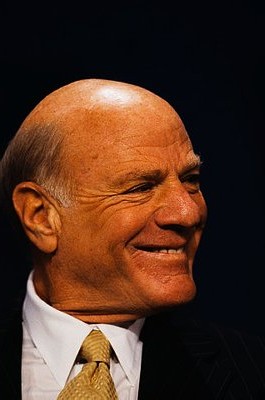
USA Networks CEO Barry Diller

By: Brian J. Meli

You’d be hard pressed to find two savvier media moguls than Barry Diller and Les Moonves. Diller, the charismatic, long-time industry heavyweight and brainchild behind the Fox Broadcasting Company has held executive posts at ABC, 20th Century Fox and Paramount Pictures over the course his illustrious 50-year career. Among the many credits to his name: pioneering the made-for-television movie format, popularizing the QVC home shopping network and, most recently, founding IAC/InterActiveCorp, an Internet company whose properties include Vimeo and Match.com.

Leslie Moonves, meanwhile, the President and CEO of CBS, is well-credentialed in his own right, having served in executive-level roles at Warner Bros. Television, 20th Century Fox Television and Viacom.

The two men have been long-time competitors in the ratings wars, but now their rivalry has shifted from the small-screen to the courtroom.


Continue reading

Tagged , , , , , , , , , , ,

What The New FTC Disclosure Guidelines Mean For Your Business

Screen Shot 2013-05-08 at 4.55.37 PM

By: Brian J. Meli

Last month, the Federal Trade Commission (FTC) issued updated disclosure guidelines for online advertisers to help ensure compliance with truth in advertising laws. The new guide, .com Disclosures – How to Make Effective Disclosures in Digital Advertising, is an overdue update to the agency’s initial Dot Com Disclosures guidedisseminated well before smartphones, tablets and social media came onto the scene. While advertising disclosures are, by their fact-dependent nature, hard to standardize, the new guide does an adequate job of clarifying what is and is not acceptable given all the new ways advertisers are using the Internet. The following is an overview of some of the things you need to know before advertising online.

Continue reading

Tagged , , , , ,

The World Wide What-If: How E.T. And Mickey Mouse Nearly Changed The Internet (And World) As We Know It – Part 2

98187613_8

By: Brian J. Meli

This is Part 2 of a two-part article appearing in the May/June edition of IP Litigator. You can read Part 1 here.

In a temporary departure from our usual Legalmatter format, last week’s post contemplated a purely fictional hypo.

Lawyers love hypotheticals, in part because they make fertile ground for debate (and in part because it’s much easier to win an argument when it’s bring-your-own-facts). I deemed this particular hypothetical worthy of some ink however because it raises some thought-provoking questions about how IP laws have shaped our society.

The hypo involved going back in time and changing the U.S. Supreme Court’s decision in one of the most historic IP cases of all time, Sony v. Universal City Studios, so that plaintiffs Universal Studios and the Walt Disney Company came out on top. Such an outcome would have made Sony’s fledgling Betamax videocassette recorder (and the VCR in general) illegal due to its ability to allow users to impermissibly infringe copyrighted broadcasts. This would have had a profound affect on the evolution of consumer technology and the Internet, and fundamentally changed the ways we live, work and play today.

Last week we contemplated the online world of a parallel universe in which just such a thing happened. This week we conclude by taking a look at the equivalent off-line world.

Here’s how it might look:

Continue reading

Tagged , , , , , ,

The World Wide What-If: How E.T. And Mickey Mouse Nearly Changed The Internet (And World) As We Know It – Part 1

98187608_8

By: Brian J. Meli

This is Part 1 of a two-part article appearing in the May/June 2012 edition of IP Litigator. You can read Part 2 here.

The Universal Studios logo is a computer-generated rendering of a rotating planet Earth, partially circumscribed by the company’s name in giant block letters. It’s an iconic image that instantly invokes the might and magic of Hollywood. It’s also unintentionally allegorical, because had things turned out a little differently for Universal 30 years ago, today’s world—particularly the parts that relate to commerce and technology—might be very different.

The date was January 17, 1984—a year many associate with Apple Computer’s famous “1984” Macintosh commercial, and the George Orwell book that inspired it. But a lesser-known, and even more significant event in the history of the human race’s relationship with technology occurred that same year, and it had nothing to do with Apple. That event was the U.S. Supreme Court’s decision in Sony v. Universal City Studios, better known in legal circles as the “Sony Betamax” case.

Continue reading

Tagged , , , , , , , ,

You’re Hired, Now What Should We Call You?

By: Brian J. Meli

HiRes

It’s a dilemma that growing companies routinely face: whether to expand by hiring more employees, or assigning additional work to freelance contractors. It’s an especially common issue among advertising agencies and content providers, who routinely employ freelance creative personnel, and whose demand for creative talent often fluctuates dramatically from client to client and project to project. While the decision to hire outright or go the freelance route ultimately boils down to the particular business needs at hand, there are serious legal consequences that employers of all stripes should be aware of when considering their options.

Continue reading

Tagged , , , ,

Content Marketing And The Great Commercial Blur

By: Brian J. Meli

Back in the quaint old days of the the 1970’s and early 80’s, when the Internet was still a college science project and social networking was something you did around a water cooler, the US Supreme Court decided a series of First Amendment cases that established the modern-day boundaries between inviolate non-commerical speech (personal, religious, political speech) and less revered, but still important commercial speech.

iStock_000020102137_ExtraSmallThe result was a distinction between communication that’s subject to government restriction on the basis that it’s false or misleading (commercial), and speech that’s beyond the reach of regulation no matter how untrue or inaccurate it may be (non-commerical). It’s a distinction—and a precedent—that still stands today, nearly 40 years and numerous technological revolutions later. But the longevity of the distinction has less to do with the clarity of the decisions that formed it, and more to do with the Supreme Court resisting reexamination of an issue that, now more than ever, demands drawing boundaries between concepts that can be almost impossible to distinguish, let alone define. Continue reading

Tagged , , , , , , ,

Spam (Can Cost) A Lot!

Spam e-mail folder

By: Brian J. Meli

The practice of sending unsolicited emails en masse to prospective customers goes almost all the way back to the dawn of the digital age.  But federal regulations governing the practice have only been around for about a decade.  The CAN-SPAM Act, or The Controlling the Assault of Non-Solicited Pornography and Marketing Act, in unacronoymed form, was passed in 2003 in an effort to harmonize a patchwork of inconsistent state laws and bring order to an increasingly chaotic practice. Continue reading

Tagged , , , , ,

A Lawyer And A Marketing Guy Walk Into A Bar…To Discuss A Trademark.

By: Brian J. Meli

It sounds like the setup to a bad punchline. But with the benefit of a former career in content creation in the advertising industry, and a current career in content protection in the legal one, it could be the title of my future memoir.

iStock_000022620865_ExtraSmallThe fact is the marketing executive has always dreaded the call to/from the legal department, because it represents the demise of all that’s new, exciting and creative (i.e. everything that makes their job moderately interesting). As one former colleague put it, the advertising lawyer is the “No-Man,” named not so endearingly after his favorite word in the english language, as in “no, you can’t run that.” As far as your average brand manager or account director is concerned, a lawyer wouldn’t know a good creative concept if it walked up to him, introduced itself and then tried to strangle him with his Ferragamo necktie.

The lawyer meanwhile regards the marketing camp as a bunch of foolish risk-takers, naive to the unintended consequences of running a campaign without proper review. So who is right? Well, the fact is neither one would be doing his job very well if he wasn’t thinking along these lines. One of them gets paid to define the limits; the other to push them.  The question is: is there ever a time when the two can find common ground?  The answer: perhaps. Continue reading

Tagged , , , , , , ,
06880

Where Westport meets the world

Trademark and Copyright Law

The Stuff of Commerce, Technology and Intellectual Property Law

Technology & Marketing Law Blog

The Stuff of Commerce, Technology and Intellectual Property Law

All About Advertising Law

The Stuff of Commerce, Technology and Intellectual Property Law

Scholarly Communications @ Duke

The Stuff of Commerce, Technology and Intellectual Property Law

Rick Sanders Law

The Stuff of Commerce, Technology and Intellectual Property Law

The Stuff of Commerce, Technology and Intellectual Property Law

LIKELIHOOD OF CONFUSION™

Lawyer Ron Coleman on brands, the Internet & free speech

DuetsBlog ®

The Stuff of Commerce, Technology and Intellectual Property Law

D Gonzalez Law

The Stuff of Commerce, Technology and Intellectual Property Law